Stack, Queue, Microtasks, Macrotasks & the Event Loop 👷🏽♂️
An in-depth exploration of JavaScript's stack, queue, microtasks, macrotasks, and the event loop, explaining how they interact to handle asynchronous execution.
Javascript is often referred to as a single-threadred, which mean that it handles tasks asynchronously while running in a single thread. To achieve this, it relies on a robust system of stack, queue, micro tasks, macro task and the event loop. In this blog, we'll break down these concepts and explain how they work together to power javascript's execution model.
1. Call Stack: Where Execution Happens
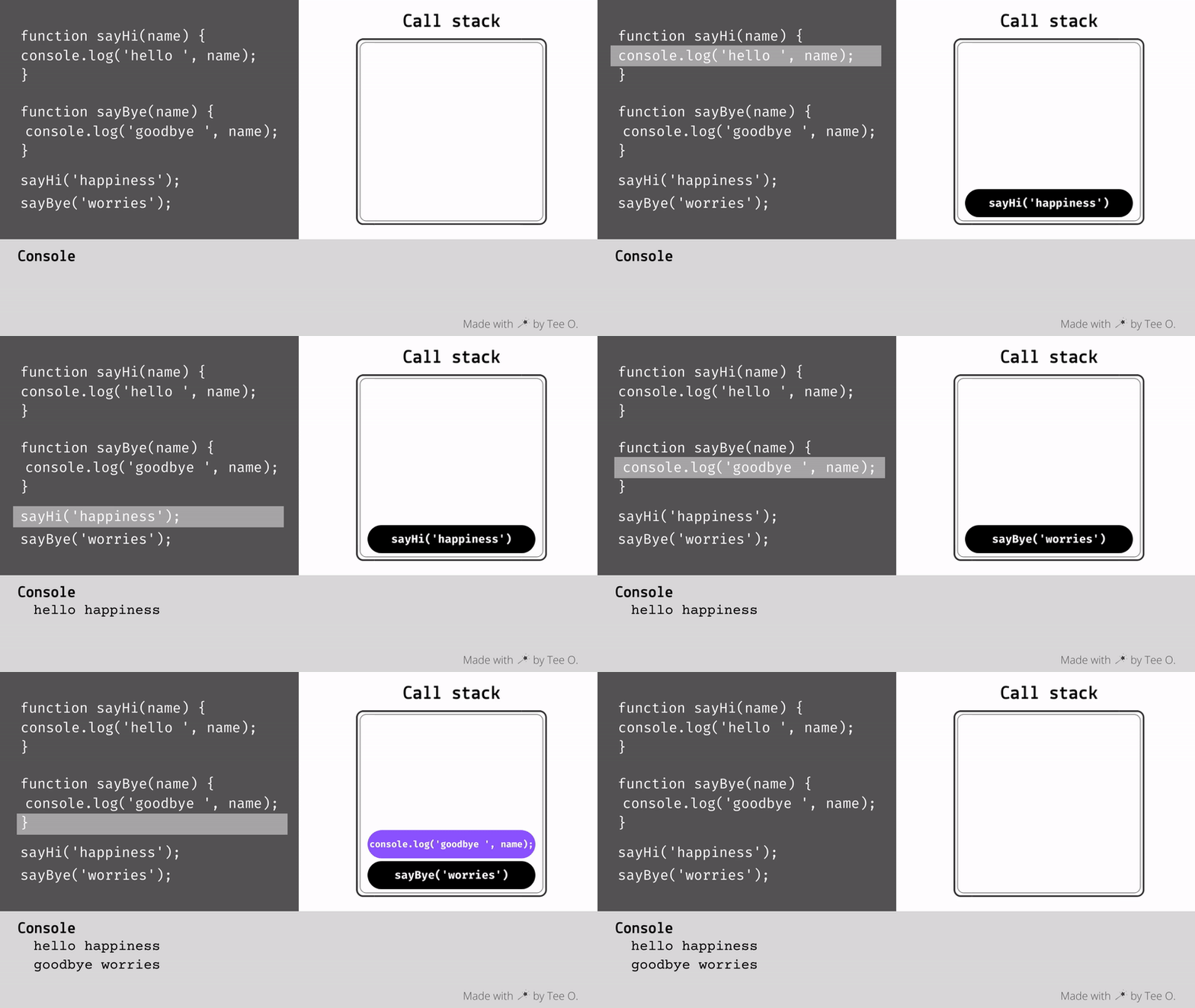
The call stack (or Stack) is a fundamental part of javascript's runtime. Whenever you call a function, it gets added to the stack and when the function complete, it is popped off the stack. It operates on the principles of LIFO (Last In, First Out).
Key Characteristics:
- Handles synchronous code.
- If a function calls another function, the second function is pushed onto the stack.
- JavaScript cannot move to the next task until the current stack is empty.
// ExampleStack.ts
console.log("Start");

function innerFunction() {
    console.log("Inner function end");
}

function outerFunction() {
    innerFunction();
    console.log("Outer function end");
}

outerFunction();

console.log("End");
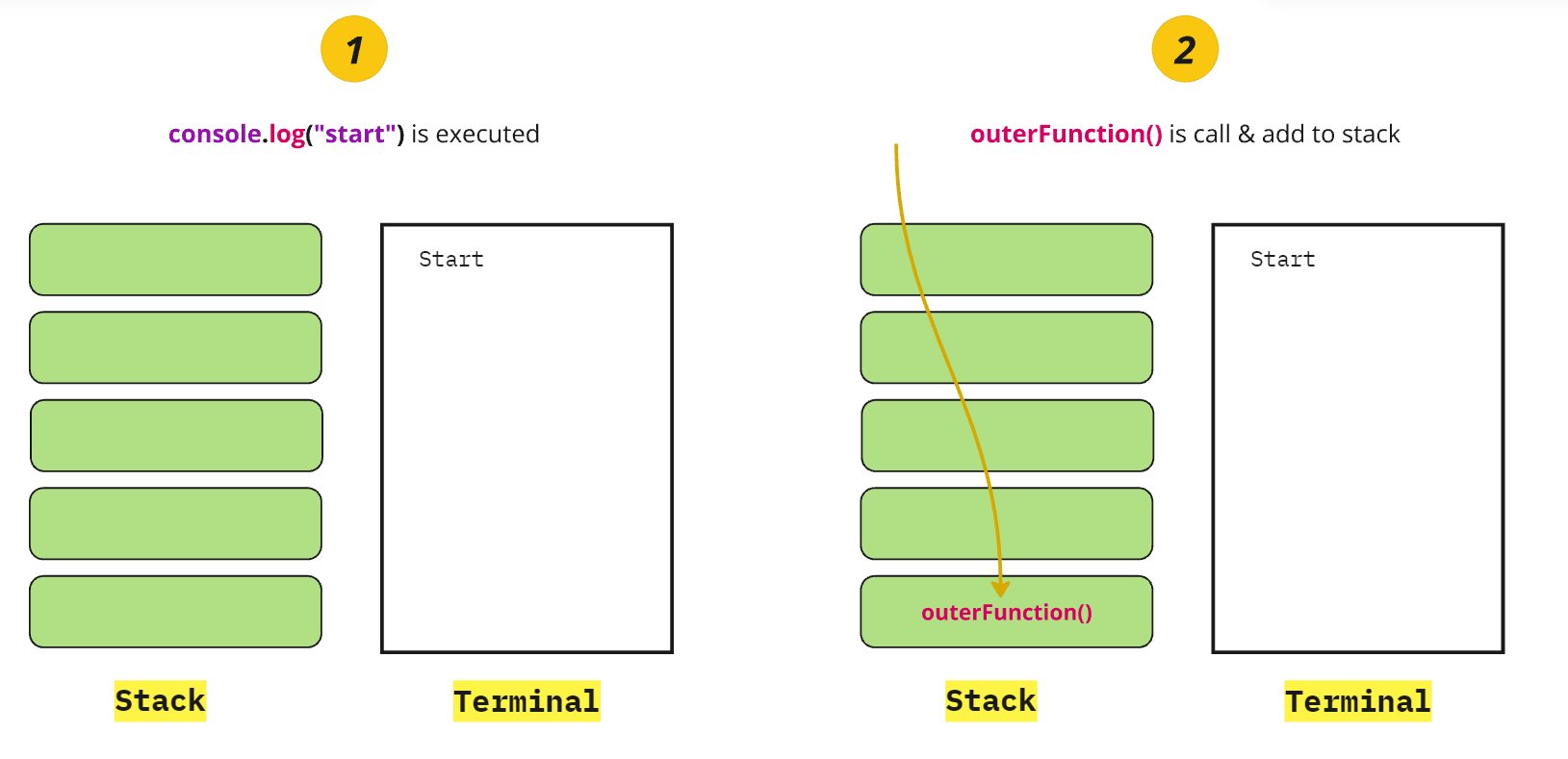
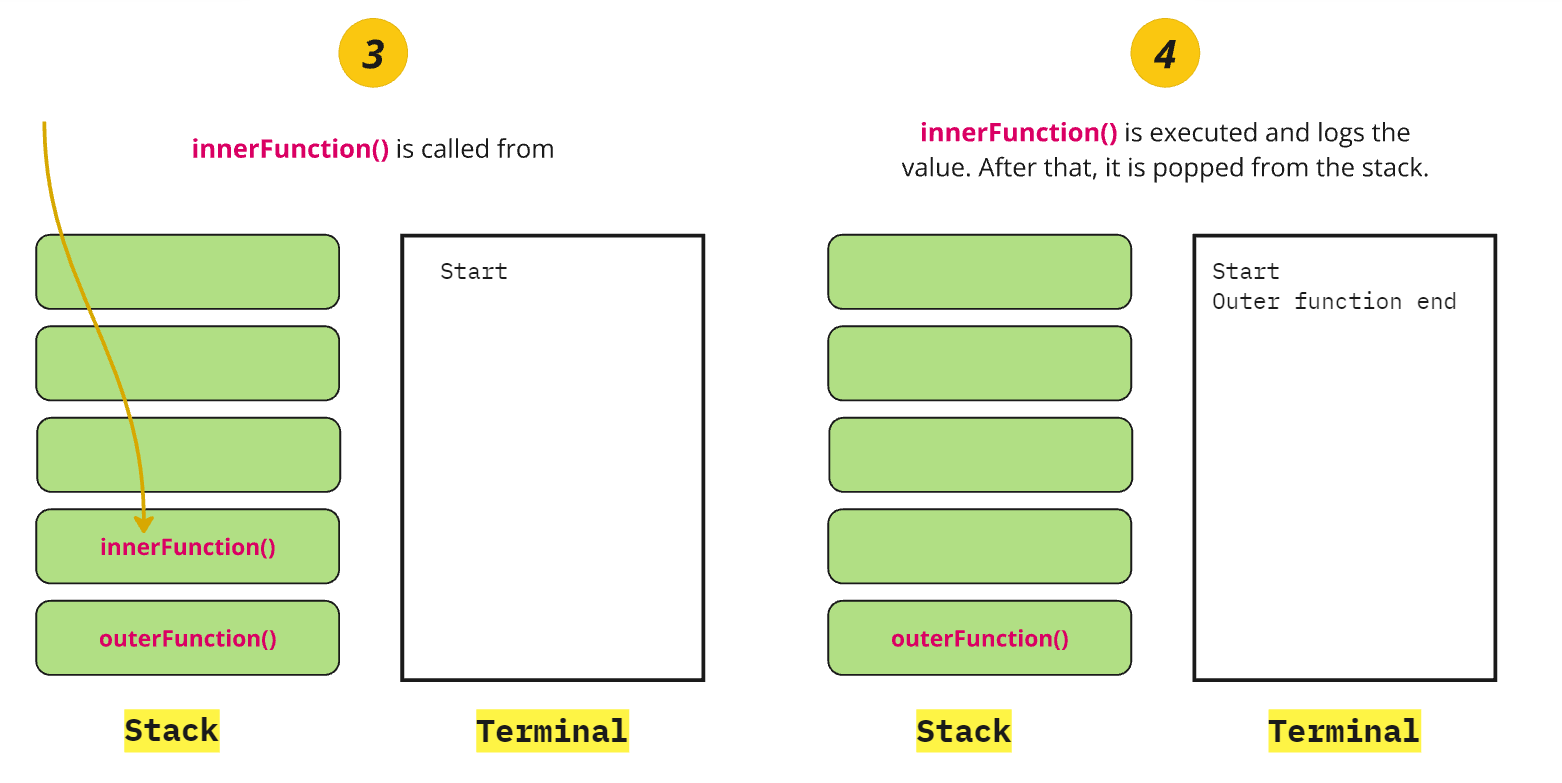
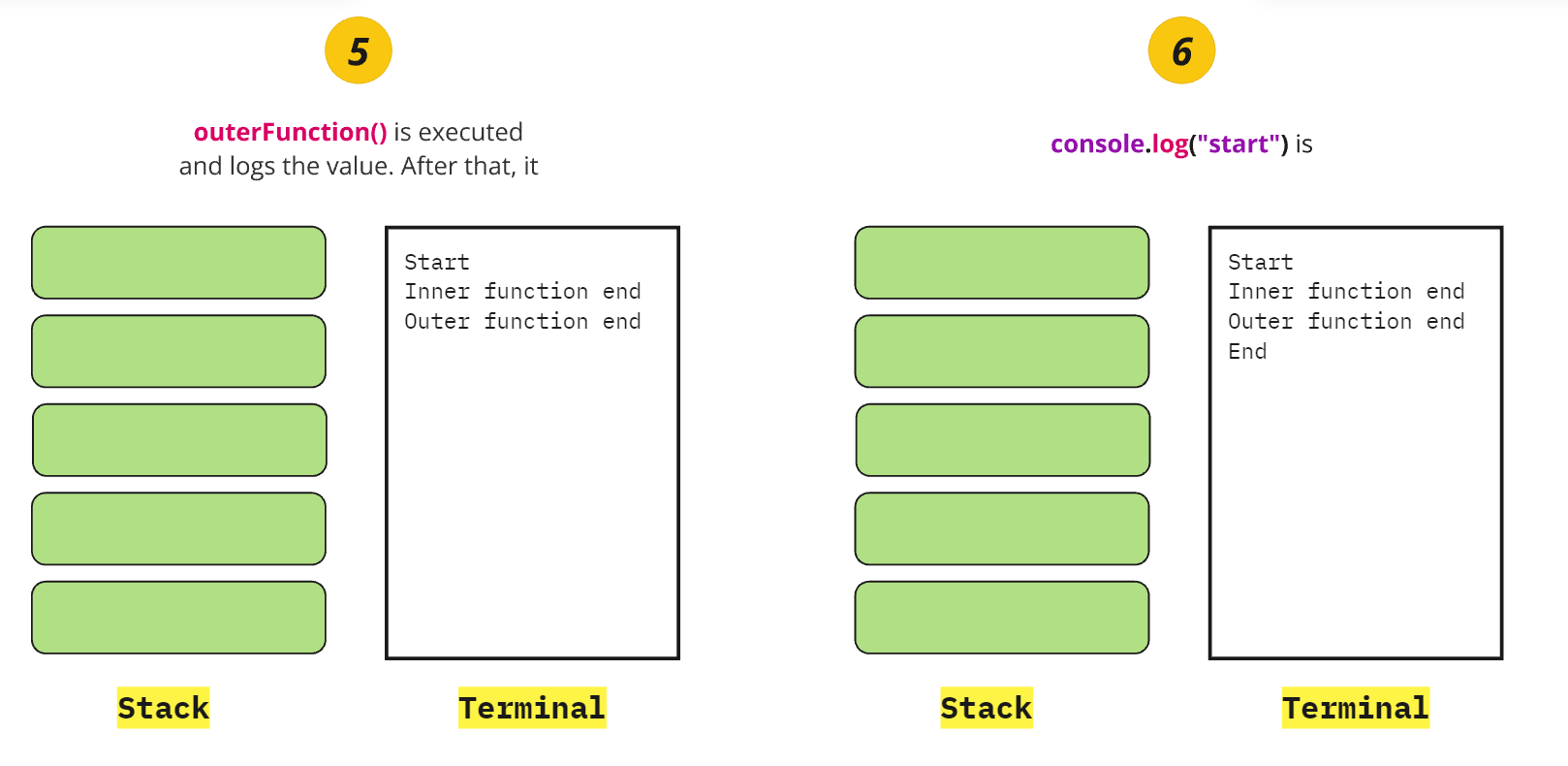
Example from tolobayo:
2. Task Queue: Managing Asynchronous Code
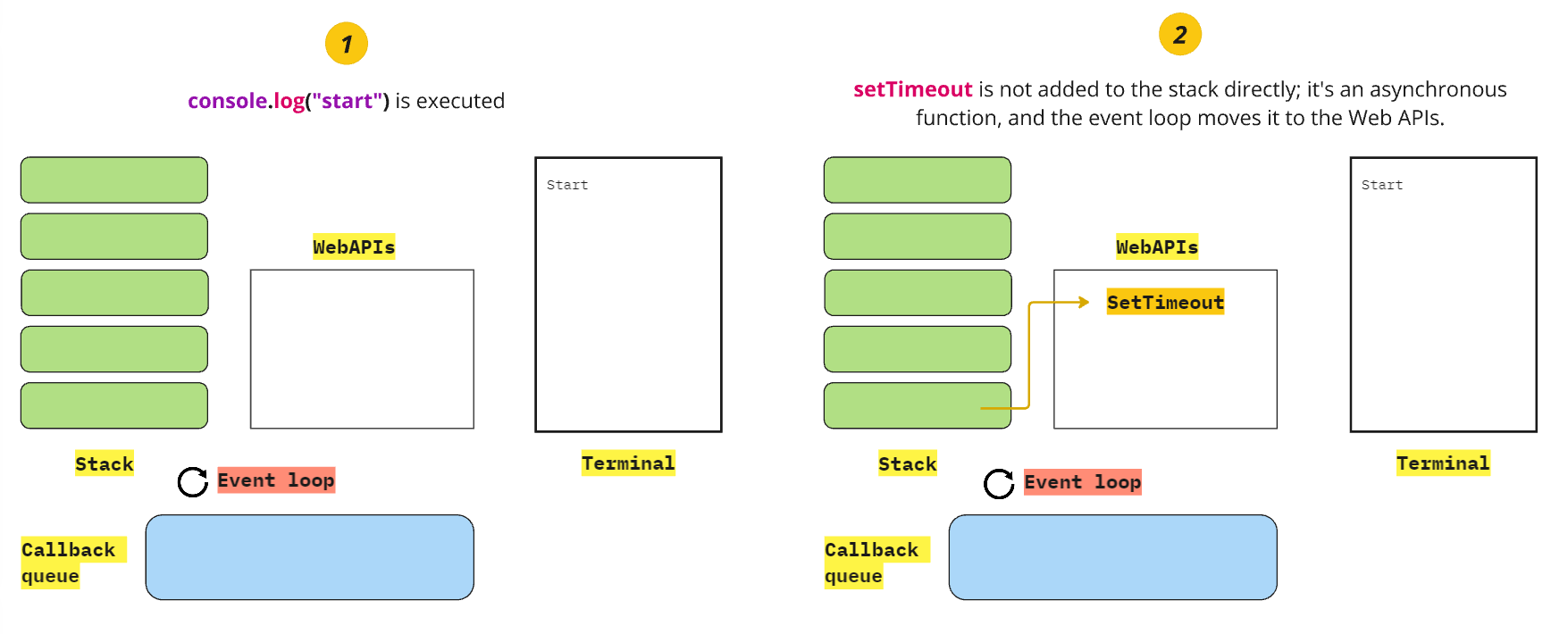
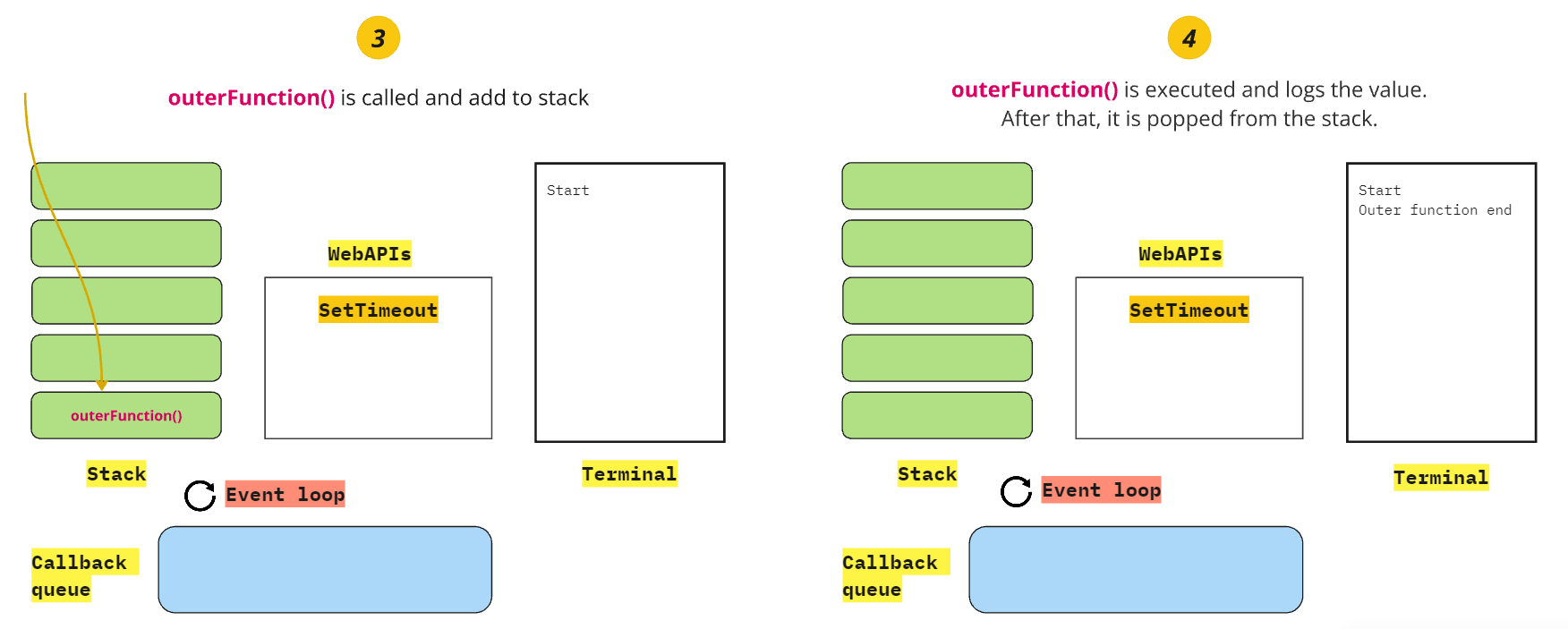
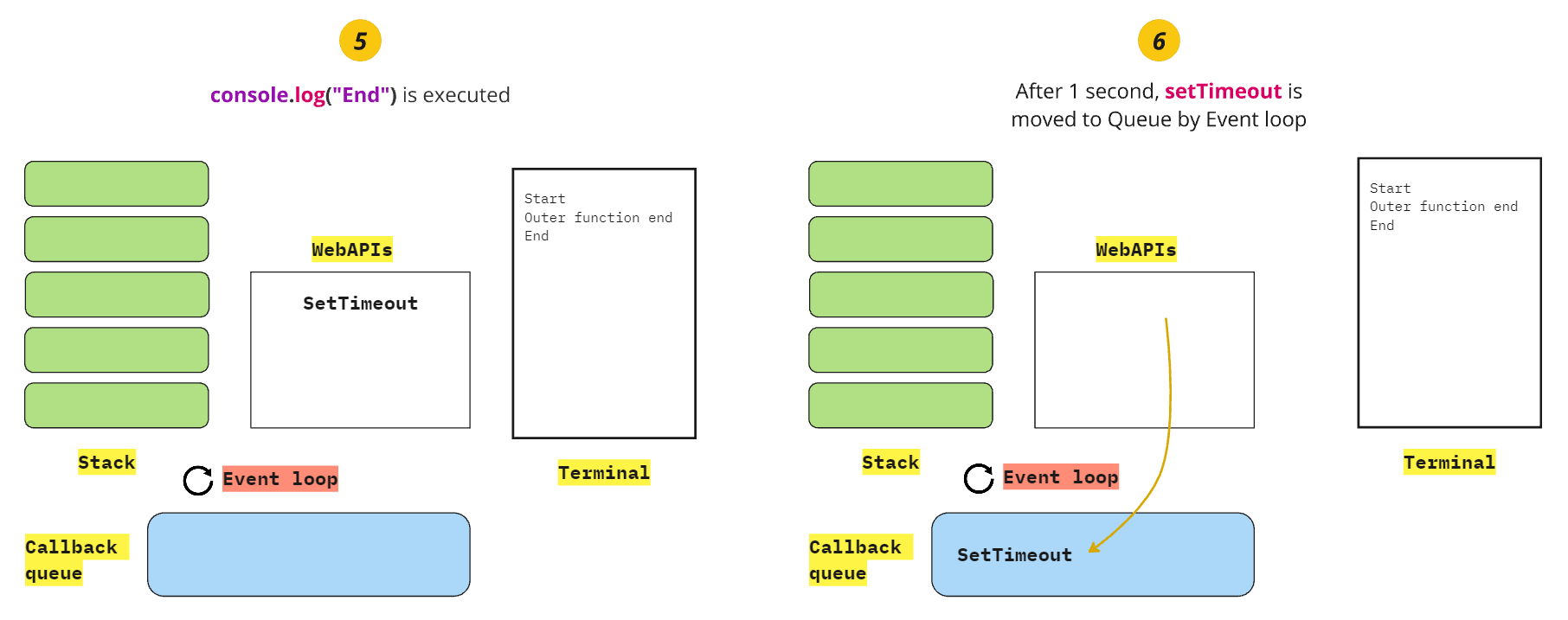
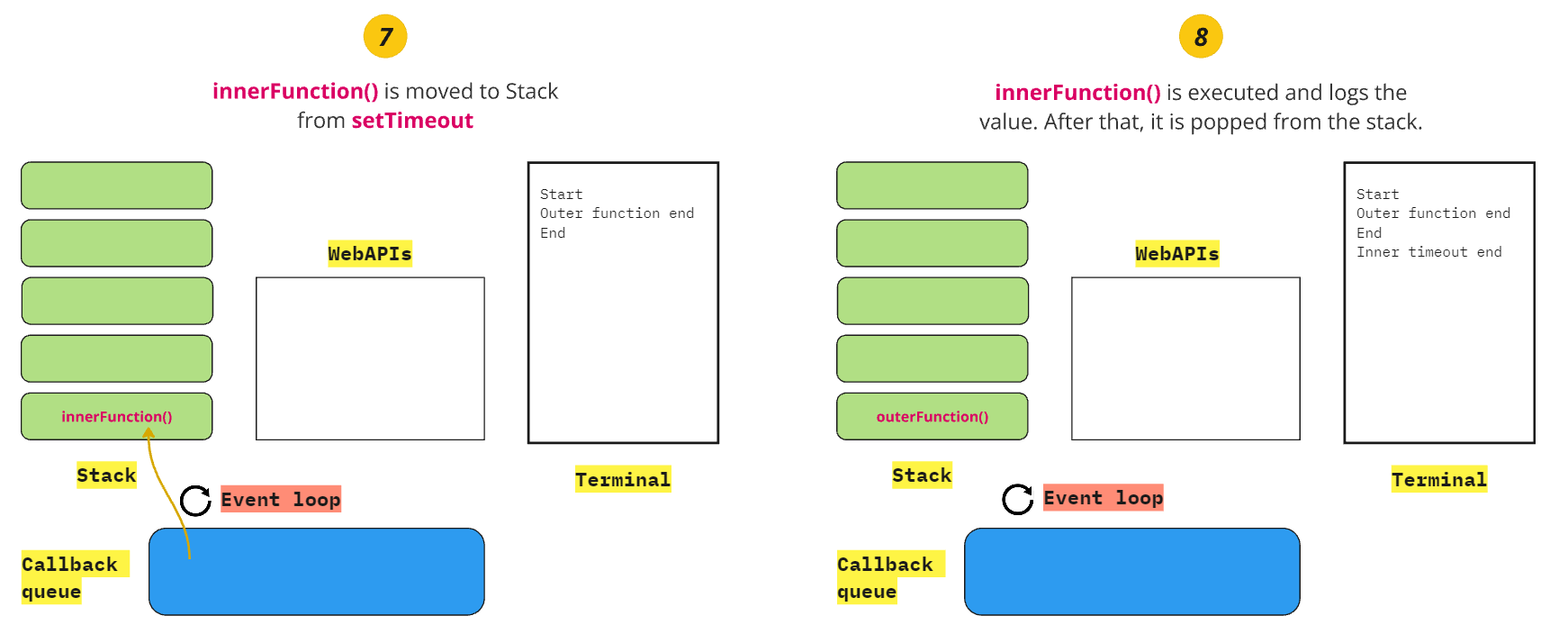
The task queue (or callback queue) is where javascript stores asynchronous operations like setTimeout or events waiting to be executed. when the call stack is empty, the event loop (as coordinator) checks the task queue and moves tasks to the stack for execution.
Key Characteristics:
- Follows FIFO (First In, First Out).
- Used for macrotasks like setTimeout, setInterval, and DOM events.
console.log("Start");

function InnerTimeOut() {
  console.log("Inner timeout end");
}

setTimeout(() => {
  InnerTimeOut()
}, 1000);

function outerFunction() {
    console.log("Outer function end");
}

outerFunction();

console.log("End");
3. Microtasks: The VIPs of Asynchronous Execution
Microtasks are high-priority tasks that are executed before macrotasks. Promises and MutationObserver callbacks are examples of microtasks. They are queued in the microtask queue, which is separate from the task queue.
Key Characteristics:
- Processed right after the current stack is empty but before any macrotasks.
- Ensure a smoother execution of asynchronous tasks.
// ExampleMicroTask.ts
console.log("Start");

setTimeout(() => {
  console.log("Timer callback");
}, 0);

Promise.resolve().then(() => {
  console.log("Promise resolved");
});

console.log("End");
Execution Flow:
- "Start" is logged.
- setTimeout schedules the callback in the task queue.
- The promise's .then() schedules a microtask.
- "End" is logged.
- The microtask (Promise resolved) runs before the macrotask (Timer callback).
Output:
Start
End
Promise resolved
Timer callback
4. Macrotasks: The Backbone of Asynchronous Execution
Macrotasks include tasks like setTimeout, setInterval, I/O tasks, and rendering. They are lower in priority compared to microtasks, meaning the event loop processes all pending microtasks before moving on to the next macrotask.
5. The Event Loop: The Conductor of the Orchestra
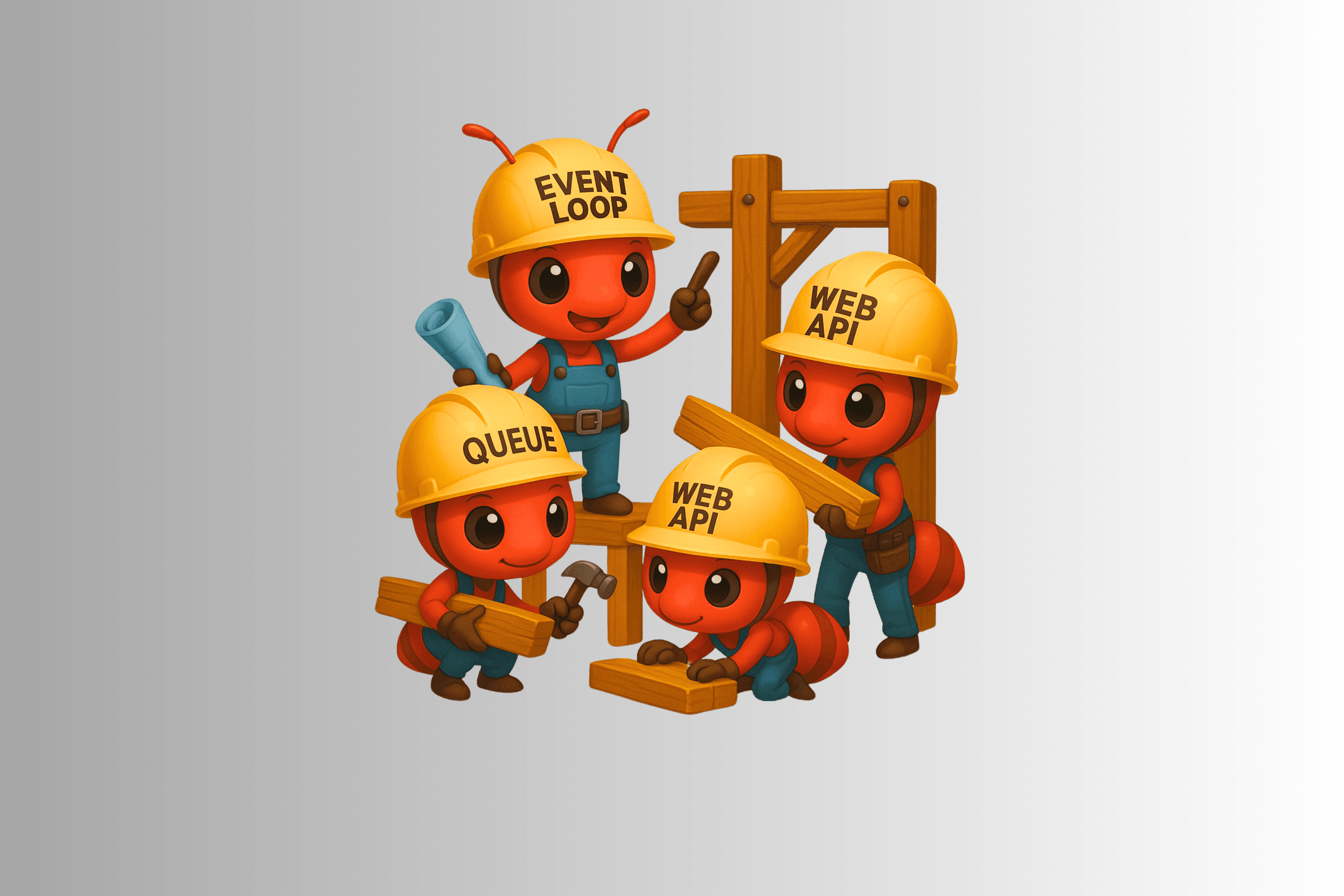
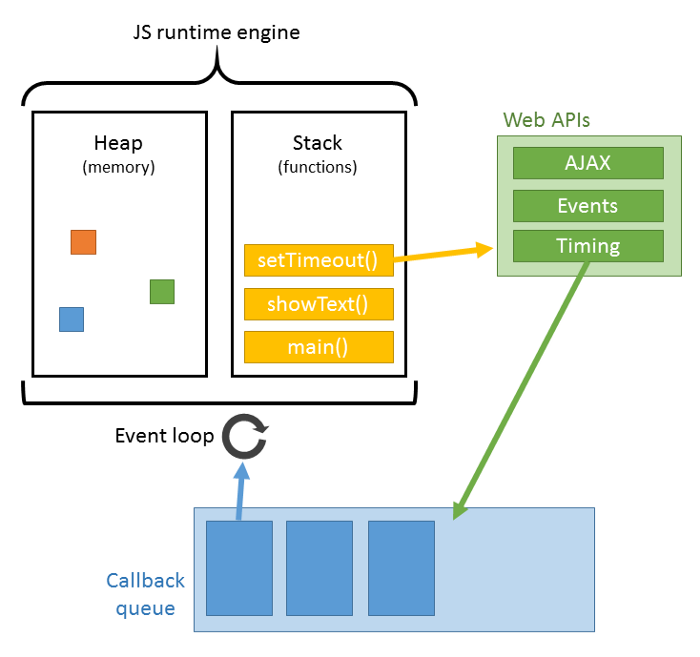
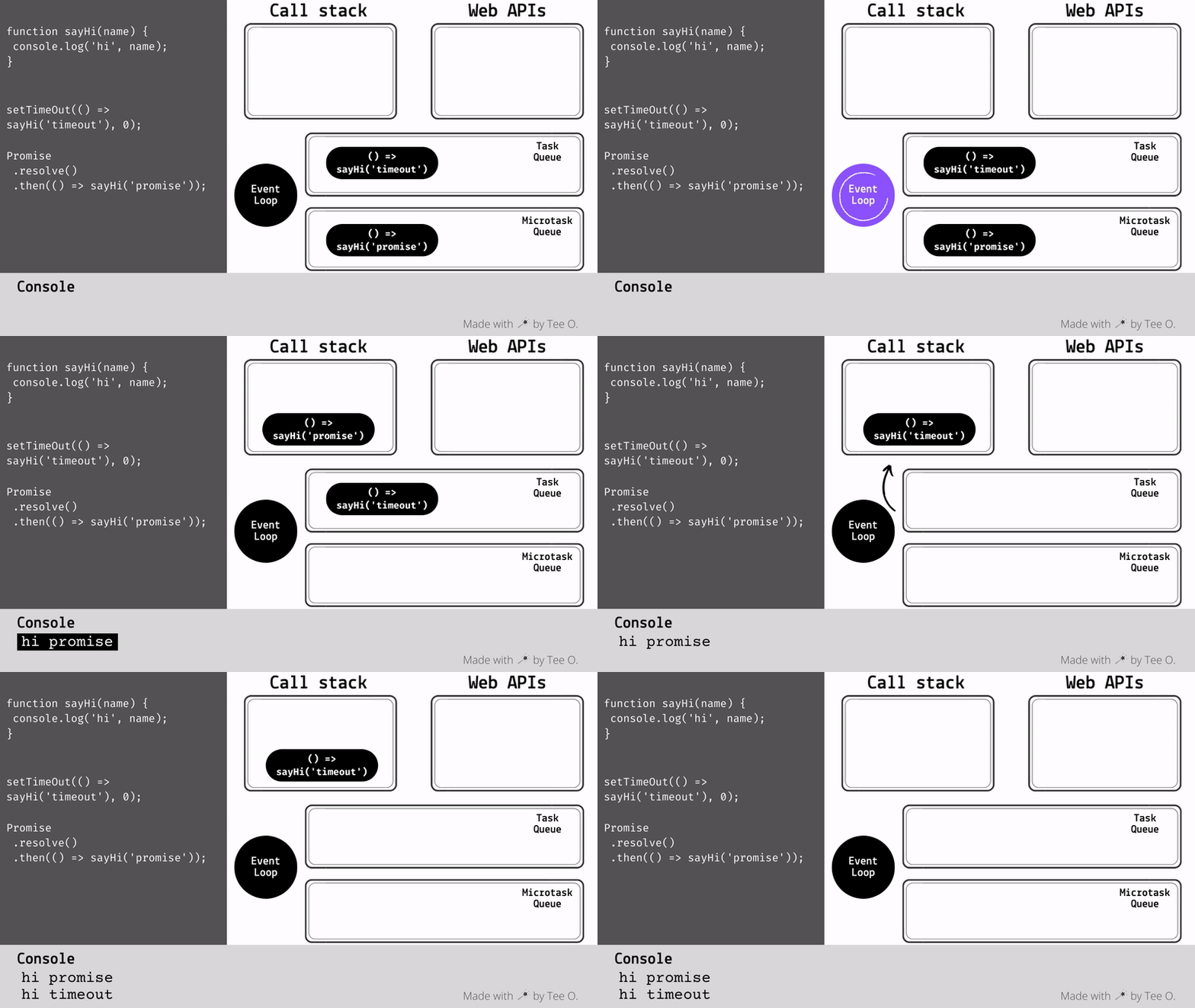
The event loop is a mechanism that coordinates the execution of tasks, microtasks, and rendering. Its primary role is to ensure that the JavaScript runtime doesn't block and keeps processing tasks efficiently. How the Event Loop Works:
- The event loop checks the call stack.
- If the stack is empty, it processes all microtasks from the microtask queue.
- Once microtasks are done, it moves to the task queue and processes the first macrotask.
The characteristic of function execution in JS is that it will only stop when the function returns or throws an exception.
Example from tolobayo:
6. Why Does This Matter?
Understanding these concepts is crucial for:
- Writing efficient asynchronous code: Knowing when tasks execute helps prevent race conditions or unintended delays.
- Debugging issues: You can pinpoint where a promise or timeout is getting stuck.
- Optimizing performance: Microtasks run faster, so use them wisely for critical operations.
Conclusion
The interplay between the call stack, task queue, microtasks, macrotasks, and the event loop forms the backbone of JavaScript's asynchronous behavior. By mastering these concepts, you’ll gain a deeper understanding of how JavaScript executes code and be better equipped to write performant and bug-free applications.
Got questions? Drop them in the comments! Happy coding! 🚀